For as long as we’ve worked in healthcare, one paradox has driven us: the country that spends the most on care produces some of the most avoidable harm. The United States spends more on health care than any nation on earth — roughly 18 percent of our economy. Yet on the measures that matter most, like deaths that timely, effective care could have prevented, we rank at the bottom of the high-income world.
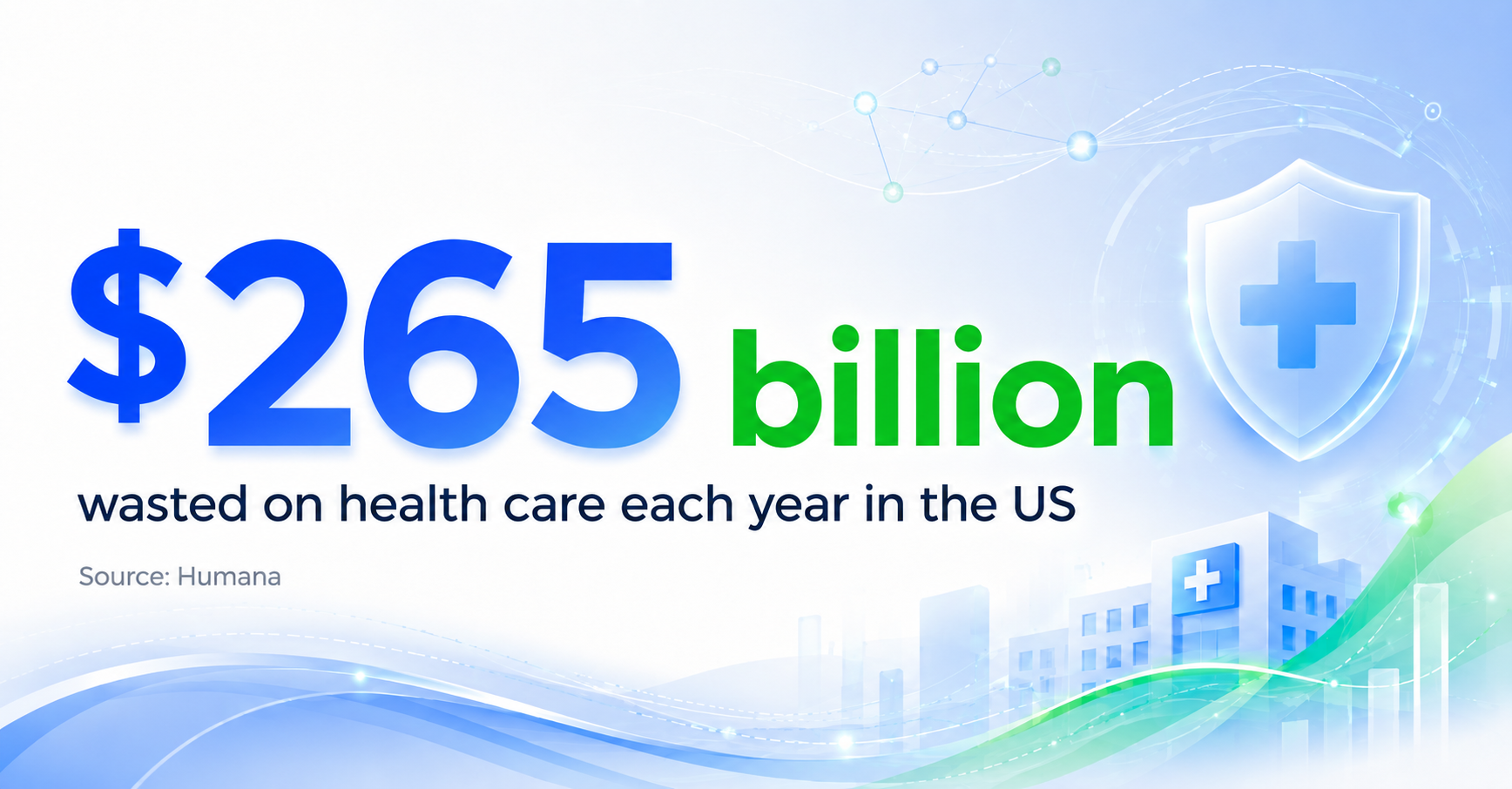
And despite all that spending, a quarter to a third of every dollar is considered waste — spending that adds cost without improving care or outcomes.
That waste isn’t only financial. The missed diagnosis, the duplicated procedure, the delayed intervention — each is both a dollar that didn’t buy health and a patient put at risk. Waste and avoidable harm are often two sides of the same problem.
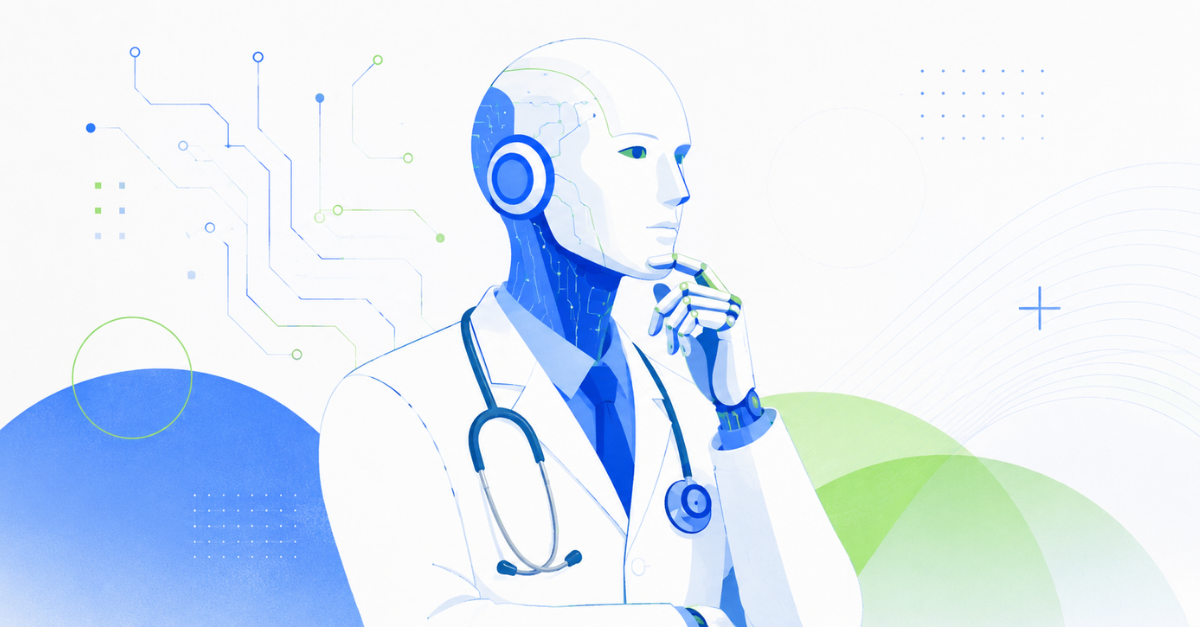
That conviction led us to build Jvion, a clinical AI company focused on reducing avoidable harm by identifying patients at risk before deterioration became obvious. We used AI to surface those risks earlier and help care teams identify interventions that could prevent harm — helping clinicians intervene sooner for millions of patients across hundreds of hospitals. The goal was never to build an AI company. It was to eliminate waste and harm; AI was simply the tool that finally made it possible.
For three or four decades, the industry couldn’t make a real dent, because you can’t eliminate what you can’t see. AI changes what’s possible, giving us, for the first time, a tool powerful enough to identify and address both at scale.
But we should be honest about the other edge of the blade.
Every health system is now racing to deploy AI — everywhere, all at once. That instinct is right. But AI deployed without AI governance doesn’t just fail to fix the problem. It becomes a brand-new source of the very thing we’re trying to eliminate: waste and harm, at machine speed, across the entire organization.
Because LLM-based AI is non-deterministic, consider what “new harm” looks like once AI enters the workflow:
Clinical harm. A diagnostic model that misses the signal that was there all along. A patient-facing assistant that, optimizing to reassure, tells someone their symptoms are nothing to worry about, so they skip the follow-up, and a cancer that could've been caught goes unwatched.
And the regulatory risks are just as significant: a model operating beyond its FDA-cleared use or outside the approved standard of care; an assistant that logs or exposes PHI in violation of HIPAA; or a clinical decision with no audit trail to show that a clinician ever reviewed it.
Financial harm. An AI coding assistant that upcodes — nudging every encounter toward a higher-reimbursing code, generating revenue today and False Claims Act exposure tomorrow.
The compliance surface is just as wide: an agent that steers referrals in ways that trip Anti-Kickback or Stark rules; an assistant that promises charity care outside the institution’s 501(r) policy; one that quotes coverage and price in ways that violate No Surprises Act transparency.
Each is a workflow that adds cost and liability instead of removing them.
These are the predictable failure modes of putting probabilistic systems into high-stakes workflows without a governing layer. Every new AI tool adds surface area — a new place where harm can reach a patient, a clinician, or your balance sheet. Deploy a hundred tools and you’ve opened a hundred new fronts.
So, the question for every health system leader is simple: How do you make sure the AI you’re deploying to catch clinical and financial harm doesn’t become the source of it?
The answer isn’t to slow down. It’s to do AI right — and “right” has a specific meaning. It means AI that plays by your rules: your clinical policies, your coding and compliance standards, your patient-safety requirements — not written in a binder, but enforced on the AI’s behavior in real time, before an out-of-policy action ever reaches a patient or a claim.
And because these systems are non-deterministic — the same prompt can return a safe answer today and a harmful one tomorrow — it isn’t enough to certify a model once and trust it. Every prompt, every transaction has to be validated as it happens. A single out-of-policy call is all it takes to harm a patient or trigger a claim.
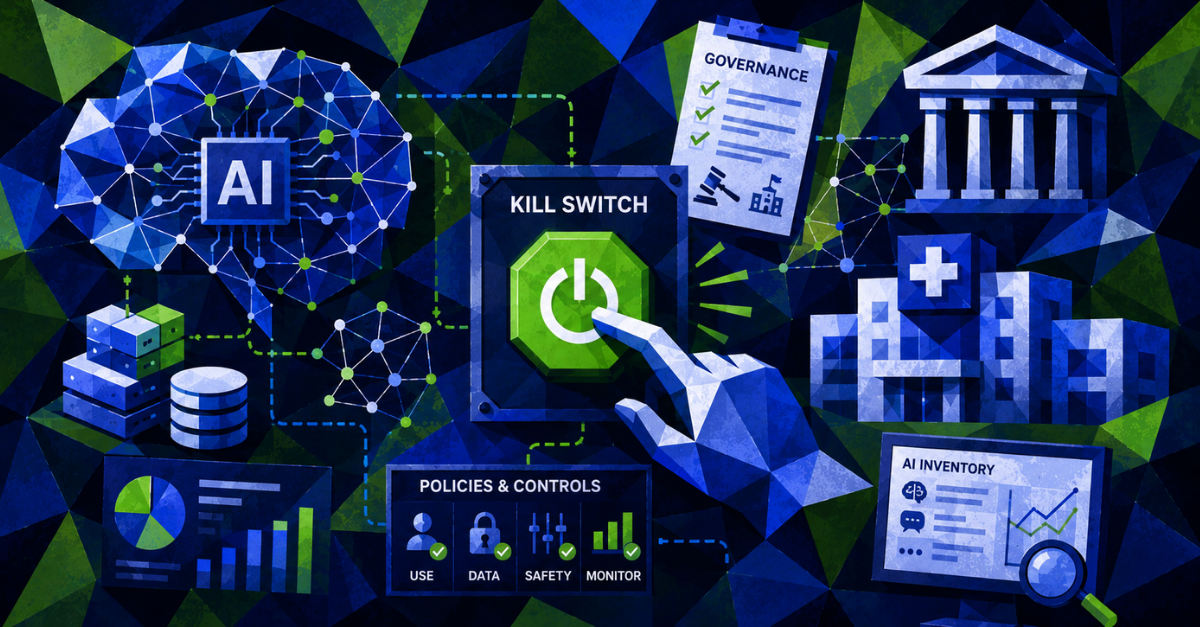
Doing AI right means seeing every AI operating inside your system, governing what each one is allowed to do, and proving — to your board, your regulators, your clinicians — that it did what it was supposed to. Inside those guardrails, AI can finally do what we’ve always wanted: take out the waste and the avoidable harm together, without becoming a new reason for either. Outside them, you’ve simply automated the problem.
This is the work we’ve taken on at Vitea — same mission, next chapter. But the point is bigger than any one company.
For the first time in a generation, we have a real shot at the thing that has eluded American healthcare for decades: spending that finally reaches the patient. AI is how we get there. Governance is how we make sure it’s a step forward, and not a faster way to fail.
That’s the conversation worth having. Not whether to deploy AI; that’s decided. But how — so that it earns the trust we’re all about to place in it.
Shantanu Nigam is Co-Founder and CEO of Vitea, where he's building the governance layer that lets health systems adopt AI safely and at scale. He previously co-founded Jvion, a clinical AI company whose predictive models ran across 400+ hospitals — reaching millions of patient lives to catch deterioration before it happened — through its acquisition in 2019. Across both companies, his mission has stayed constant: use AI to take waste and avoidable harm out of American healthcare, together.












.png)


















.png)


.png)
.png)