



.svg)


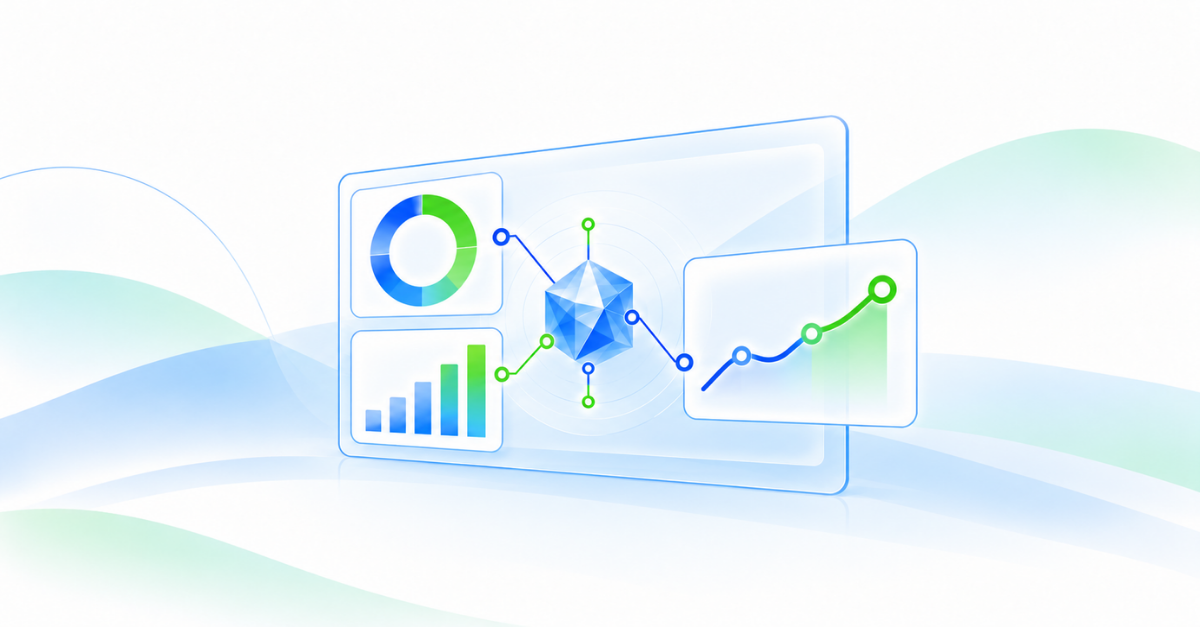
Vitea Lens gives you complete, enterprise-wide visibility into every AI tool in use — sanctioned, clinical, and shadow — across every hospital, clinic, and care setting. In days, not months, without adding a single agent to your network.

Partnering to confidently advance healthcare AI innovation.
Clinicians, departments, and vendors are adopting AI faster than IT can track it — and every unmonitored tool is a blind spot for security, compliance, and patient safety.


Find and assess every AI application across your organization before hidden use becomes operational, financial, or compliance risk.
Complete AI visibility that turns hidden risk into measurable value — for security, spend, and compliance.
Complete AI visibility turns hidden risk into measurable value — for security, spend, and compliance alike.
Replace estimates with a live inventory of sanctioned, clinical, and shadow AI across every site.
.svg)
Surface unsanctioned tools by department and location before hidden adoption becomes a security or compliance issue.
Use facility-level cost, usage, and ROI data to consolidate tools, strengthen vendor negotiations, and invest in what delivers value.
Turn your AI inventory into an exportable system of record for auditors, regulators, and leadership.
A health system estimated roughly 30 AI applications in use. Vitea Lens discovered more than 120 — with 90+ running completely unmonitored and ungoverned, invisible to IT, security, and compliance until Lens surfaced them.
90+ running unmonitored

We estimated maybe 30 AI tools running across our system. Lens found more than four times that in the first week. That number alone changed how we're thinking about governance.

Security teams can't protect what they can't see. Lens gave us a real inventory, including tools our own departments didn't know were touching patient data, without deploying a single agent.
Before Lens, proving AI governance to an auditor meant piecing together spreadsheets from five different departments. Now it's one registry, with answers instead of guesses.
Clinicians are already using AI to save time. The question was always whether we knew about it. Lens showed us exactly which tools were touching clinical workflows, department by department.
Let us help you understand and break down the complexity of AI governance.
Shadow AI in healthcare is the use of AI tools, models, or embedded AI features inside an organization without IT approval, security review, or governance oversight. It includes clinicians using consumer chatbots for documentation, departments adopting free AI tools, and AI features vendors add to existing software through updates. Most shadow AI isn't malicious; staff adopt it to work faster. But every unvetted tool is an unmonitored pathway for PHI exposure.
More common than most leadership estimates. Surveys show over 40% of healthcare workers are aware of colleagues using unapproved AI tools, and nearly 20% admit to using one themselves. In practice, discovery consistently outpaces estimates: one health system that estimated up to 30 AI applications in use discovered more than 120, with 90+ running completely unmonitored.
Shadow AI is detected by analyzing network traffic, DNS queries, and existing system logs to identify AI application activity. Manual surveys and spreadsheets miss vendor-embedded AI and browser-based tools entirely. Agentless approaches that build an inventory from logs you already have can surface every AI application across all facilities in days, without deploying software to endpoints.
DLP and CASB tools were built to track files and sanctioned cloud apps, not conversational AI traffic. They can't see prompts, classify thousands of emerging AI applications, or detect AI features embedded inside software you've already approved. That's why organizations with mature DLP programs still discover dozens of unknown AI tools when they deploy purpose-built AI visibility.
The primary risks are PHI exposure, HIPAA violations, patient safety, and breach cost. Data entered into unvetted AI tools may be retained or used for model training with no BAA in place. Shadow AI was a factor in roughly 20% of breaches in IBM's 2025 Cost of a Data Breach study, and the average healthcare breach now costs $7.4M.
Effectively, yes. Proposed HIPAA Security Rule updates call for a written risk analysis and documented technology asset inventory reviewed at least every 12 months, and AI systems that touch ePHI fall squarely within scope. Auditors and regulators increasingly expect health systems to answer what AI is in use, what data it touches, and who approved it. You can't produce that answer without a live inventory.
A defensible AI inventory captures every AI application (clinical, administrative, and vendor-embedded) plus the vendor, users, departments, facilities, data types touched, risk score, and approval status for each. Critically, it must be live, not a point-in-time spreadsheet; vendors ship new AI features monthly, and staff adopt new tools weekly.
Vitea Lens is the AI visibility layer of the Vitea AI governance platform, built specifically for healthcare. It discovers every AI application running across a health system — sanctioned, clinical, and shadow — and builds a live, enterprise-wide inventory with risk scoring, usage attribution, and facility-level cost data. Lens works from existing network logs, requires no agents or network changes, and delivers a complete inventory in days.
Lens analyzes logs your infrastructure already generates to identify AI application traffic, then automatically triages every application it finds — no manual tagging. Unapproved AI is flagged and routed for review, attributed to specific users, departments, and facilities. Because Lens is agentless, there's nothing to deploy and no disruption to clinical operations.
DLP and CASB tools monitor files and sanctioned apps; Lens is purpose-built to see AI. It detects consumer AI tools, vendor-embedded AI features, and clinical AI that generic security stacks miss, and it's designed for healthcare, mapping findings to PHI exposure, facility structure, and audit requirements rather than generic data categories.
See how Vitea helps healthcare organizations monitor, govern, and reduce AI risk.
Purpose-built for healthcare compliance and AI governance.
Identify, monitor, and mitigate AI risks across your organization.
HIPAA-ready, SOC 2 compliant, and built with enterprise security at the core.




























.png)




.png)


.png)