
Weill Cornell Medicine says patient data from a radiology study went into AI tools without authorization. Plus: a new survey on AI tools that staff build themselves, new Gallup data on what patients will accept from clinical AI, and two studies that compare AI with clinicians.
For the second time in a month, a major academic medical center has disclosed that patient data reached AI tools it had not approved. Weill Cornell Medicine's notice, issued Nov. 5, follows the Johns Hopkins disclosure we covered two weeks ago. Weill Cornell had a policy on AI use. The data left anyway, and the organization found out nearly three months later.
The rest of the week's news follows a similar line. Staff are building AI tools faster than security teams can review them. Patients say they will accept AI in their care if a clinician can overrule it. And two new studies show AI outperforming clinicians on narrow tasks, with limits that only show up when someone is checking.
The question for health system leaders: When AI touches patient data or a clinical decision, can you see it, control it and show what happened?
Weill Cornell Medicine disclosed that patient health information was entered into AI tools and processed with machine learning, without authorization, as part of a radiology research study, the organization reported. An investigation found that data from Weill Cornell Imaging at NewYork-Presbyterian or NewYork-Presbyterian Hospital was entered into the tools between June 10 and June 20. The organization learned of the incident Sept. 6.
The data included medical record numbers, radiology accession numbers, dates of service, facility and provider names, and clinical details such as diagnoses, treatments, procedure histories and medications. According to the Nov. 5 notice, it did not include names, addresses, Social Security numbers or financial information. Weill Cornell said it has found no evidence that an unauthorized person viewed the data or that it was misused.
Weill Cornell suspended the research, asked that all involved data be deleted and added training on appropriate AI use. The notice did not name the AI tools, say who entered the data, give the number of patients affected or confirm that the deletion was completed.
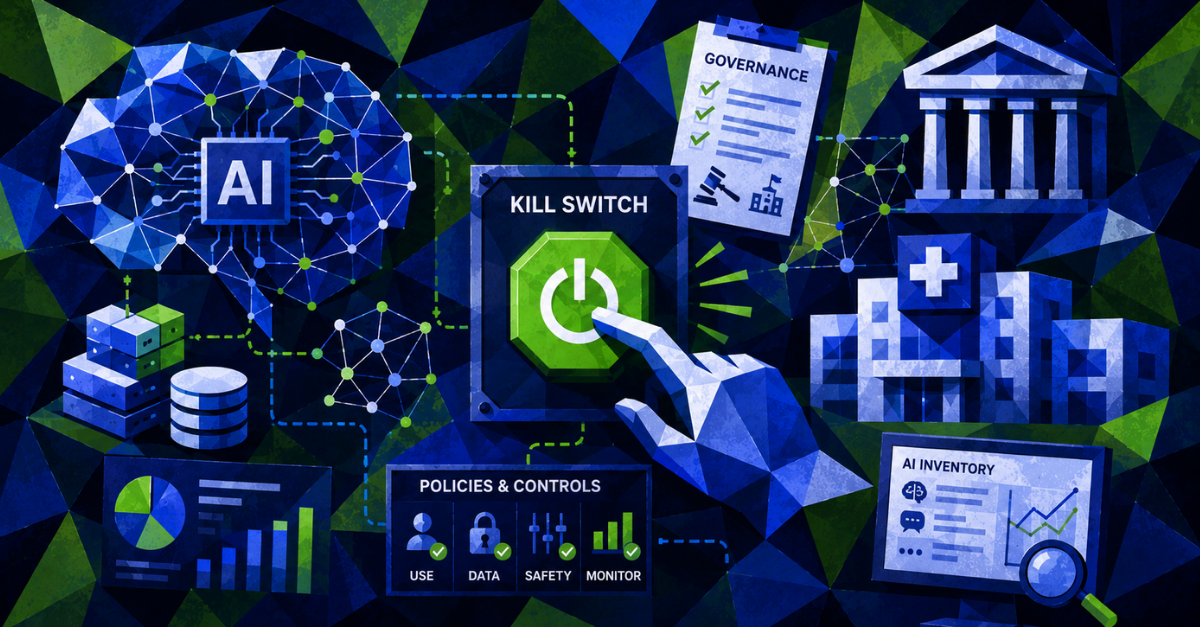
Why it matters: The use violated Weill Cornell's own policy, and every corrective step came after the fact. The only option for the data itself was a request to delete it. Policies and training set expectations, but they cannot stop an upload while it is happening. That requires enforcement at the point of use, where a prompt carrying patient data is checked before it reaches an unapproved tool. It also requires visibility into which AI tools are in use, so unapproved activity surfaces quickly instead of during a later investigation.
Seventy percent of healthcare organizations have found an AI-built tool that handled protected health information without IT or security knowing, according to a new report from Paubox, a HIPAA-compliant email security company. The company surveyed 151 healthcare leaders in July. All work at organizations that handle PHI electronically and use AI coding assistants.
The report looks at staff who use AI coding assistants to build their own tools, scripts, automations and integrations. Eighty-five percent of respondents said those tools have handled, stored or transmitted PHI, and 51% said AI-generated or AI-assisted code has already contributed to PHI exposure. Only half have a fully implemented written policy on AI coding assistants.
Most respondents, 87%, said a security, privacy or compliance professional always or usually reviews AI code that handles PHI before it goes live. The report notes that a review only covers the tools someone submits. It recommends starting governance with an inventory of every AI-built tool, including whether it touches PHI and who owns it.
Why it matters: Shadow AI now includes software that employees write themselves. A tool built in an afternoon can move patient data for months before anyone outside the team knows it exists, and a once-a-year inventory will miss much of it. Review processes work only on what they can see. Health systems need ongoing discovery of the AI in use across the organization, including tools their own staff build.
Patients are more willing to accept AI in clinical decisions than providers assume, as long as a clinician can override it, according to West Health-Gallup research released Nov. 9. The survey of 5,330 U.S. adults asked about AI in three areas of care: diagnosis and treatment, imaging review and medication decisions. Primary care providers were asked how they thought their patients would respond.
Patient comfort was highest when AI made a decision and the provider could change or override it. Only 9% of patients were comfortable with AI making diagnosis or treatment decisions without provider review. Providers underestimated patient comfort with the override model in all three areas. When AI only assisted and the provider decided, provider estimates came within two points of patient responses for diagnosis and medication, but missed patient comfort with imaging review by 11 points.
Why it matters: Patients are drawing a clear line. They will accept AI in their care when a clinician stays accountable for the final decision, and very few will accept it without one. That puts the burden on health systems to show the oversight is real: which tools informed a decision, who reviewed the output and what policy applied. The finding is consistent with a recent Pew survey in which most Americans said they want a human making the final call on clinical AI, and with signs that patients are paying attention to AI decisions they can't see.
Researchers at NYU Langone Health have developed an AI tool that predicts which emergency department trauma patients will develop post-traumatic stress disorder, according to a study published Nov. 9 in Nature Communications. The tool, called PREVIA, analyzes recorded and transcribed answers patients give when asked why they came to the emergency department.
In a group of 145 patients, PREVIA flagged all 30 who went on to develop PTSD a month later. An emergency department clinician who specializes in PTSD correctly identified 89% of those cases. The researchers noted that only about 28% of emergency departments routinely screen for PTSD, likely because of crowding and limited clinician time.
PREVIA links several open-source large language models and requires no additional training or fine-tuning. The researchers said that design lets other hospitals test it independently, without proprietary software or access to NYU Langone's patient data.
Why it matters: Open-source models that a hospital team can download and run lower the barrier to clinical AI, including the barrier of formal review. A tool like this could be set up by a research or clinical group without going through procurement, yet it reads sensitive behavioral health information and produces risk scores that can shape care. Results from 145 patients at one institution also need local validation before they can be relied on elsewhere. Governance has to cover homegrown and open-source models along with vendor products, with validation and monitoring that continue after deployment.
AI measurements of heart function from cardiac MRI scans were more strongly linked to patient survival than measurements made by clinicians, researchers at City St George's, University of London reported. The study, published in The Lancet Digital Health, analyzed scans from 27,382 patients at two centers in the U.K. and U.S. Patients were followed for more than five years, and 3,458 died during that period.
AI-derived ejection fraction, the main measure of how well the heart pumps, was slightly but significantly better at predicting which patients were at higher risk of death. The AI took seconds per patient; earlier work found clinician analysis takes a median of 13 minutes. Errors affected about 1% of patients, and the authors recommended AI as a first-line tool with clinician oversight.
Coverage in News-Medical added several caveats from the paper. Errors were more frequent in scans with extreme ejection fraction values, particularly very low ones. The study was retrospective, performance across ethnic groups was not evaluated, and several authors disclosed financial ties to the company behind the technology. The authors said prospective studies are needed to establish the effect on patient care.
Why it matters: A 1% error rate sounds low, but averages can hide where a model fails. Here, errors clustered in scans with very low ejection fraction, the patients whose treatment decisions often depend on that number, and performance by ethnic group was not measured. Health systems adopting AI as a first read need clinicians to verify results and need monitoring that tracks performance by patient group over time, so weaknesses in high-stakes cases come to light before they become part of the patient's chart.
This week's stories illustrate that AI is reaching patient data and clinical decisions through research studies, staff-built tools and open-source models, paths that formal review often misses. Patients, meanwhile, have made their expectation loud and clear: a clinician in control, and an organization that can prove it.
Questions worth asking this week:
Vitea is an AI governance platform built specifically for healthcare. Command enforces AI policies in real time at the point of use, Lens provides visibility into AI use across the organization and Pulse delivers continuous monitoring. Talk with our team about putting real-time policy enforcement in front of the AI tools your clinicians and staff use.
Follow Vitea on LinkedIn for our weekly roundup of healthcare AI governance news.